Christopher Rae
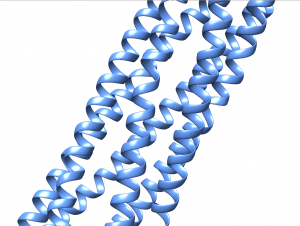
I’m using genetics, biochemistry, and structural biology to study how cell wall permeability is critical for virulence of Mycobacteria.
Depicted on the right: Structure of a periplasmic channel from Mycobacterium smegmatis.
Zoe Netter
I am exploring the interplay between mycobacterial pathogenesis and defense against phages (viruses of bacteria) and other mobile genetic elements. Human immune responses to mycobacterial infections are becoming more well-defined, but very little is known about the immune systems of the pathogens themselves and how they have evolved to survive under the threat of phage predation. The lifestyles of the diverse and ubiquitous phages that infect mycobacteria are also relatively unknown. I am developing genetic tools to assess determinants of mycobacterial phage infection and to identify trade-offs and strategies that mycobacterial pathogens employ to balance virulence activity with phage defense.
Sydnee T. Gould
I work on identifying bacterial genes responsible for Mycobacteria tuberculosis (Mtb)’s ability to enter and survive in the brain. Though commonly a respiratory disease, some Mtb strains have demonstrated heightened ability to infiltrate the brain in children. I am interested in what host or bacterial factors make particular strains better suited to cross the blood-brain-barrier and proliferate. To learn more about this phenomenon, I use wild mice that have been shown to have heightened susceptibility to Mtb meningitis.
Hannah Nilsson
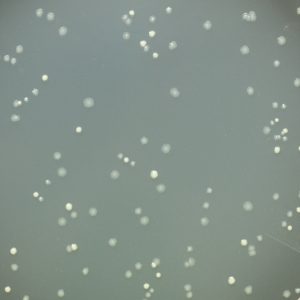
I focus on Mycobacterium avium (M. avium) and two distinct colony morphologies which heavily correlate with virulence and antibiotic resistance. I am researching the mechanism of reversible switching between the two morphotypes to understand how and why these two cell programs exist using a variety of genetic techniques.
Depicted on the left: Smooth opaque (SmO) and smooth transparent (SmT) colonies of M. avium.